How many places does one stretch of Mt. Auburn Street need to sell you a smoothie before it stops looking like coincidence and starts looking like a pattern?
Walk from the Pit toward the Charles this fall and you'll pass a storefront that's sat empty since 2023 about to reopen as a wellness cafe, a complex two doors down adding a fifth açaí concept in six years, and a tea shop moving in to restore Harvard Square to four boba shops for the third time in four years. None of this happened by accident. It happened because of a zoning rule written specifically to prevent Harvard Square from filling up with interchangeable chains, and the rule keeps approving interchangeable chains anyway. It just approves a different kind.
The count, with addresses attached
Here's what's actually opening or already open along a walk you could make in fifteen minutes:
| Business | Address | What it sells | Status |
|---|---|---|---|
| Pura Vida Miami | 95 Mt. Auburn St. | All-day breakfast, salads, bowls, smoothies | Opening October 2026, first Massachusetts location |
| BoostBerry Açaí & Smoothies | 99 Mount Auburn St. complex | Brazilian açaí bowls | Fifth açaí concept in the Square in six years |
| Chi Cha San Chen | One Brattle Square | Taiwanese boba tea | Restores the Square to four boba shops |
| Life Alive | 22 JFK St. | Organic bowls, smoothies, juices | Established, shares space with Down Under School of Yoga |
| Bluestone Lane | 27 Brattle St. | Avocado toast, espresso | Established Melbourne-style cafe |
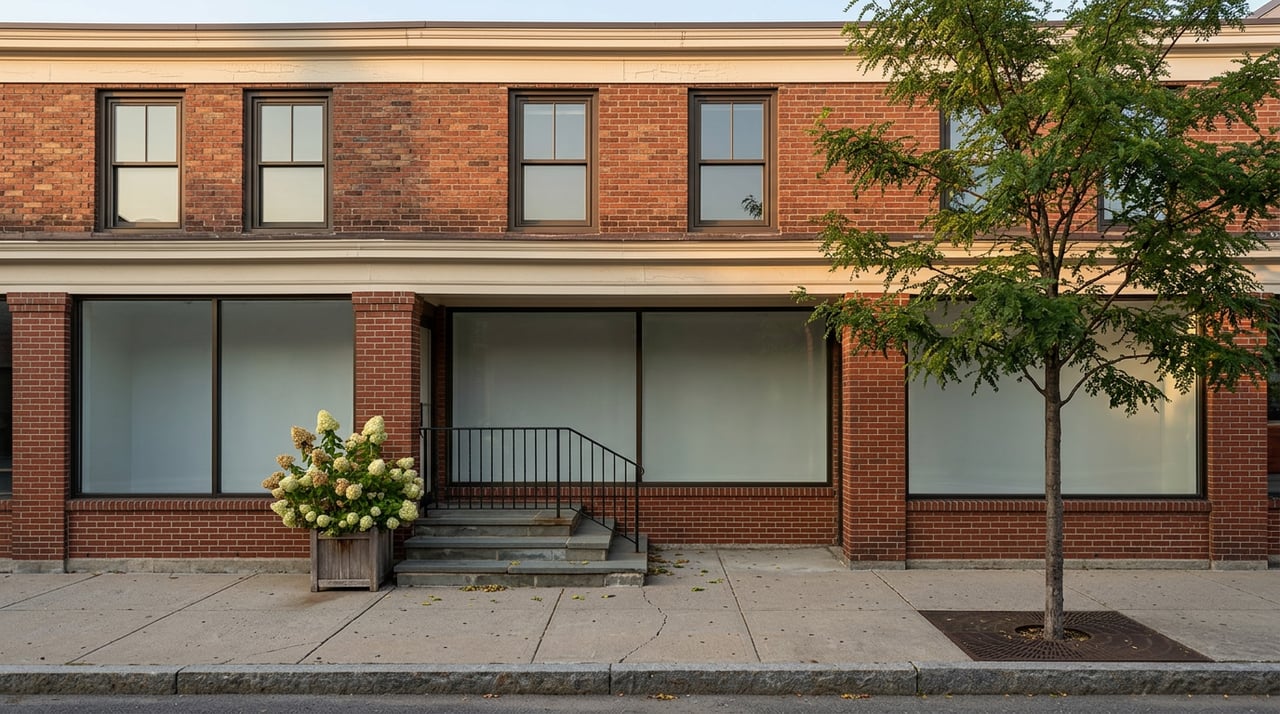
That Pura Vida location is worth sitting with for a second. It's a 4,100-square-foot storefront that had been dark for roughly three years before the company won its special permit. In a district where retail turns over fast enough to have its own local mythology, three years vacant on a corner this visible is not a small gap. It's a signal that something about filling that space was harder than usual, and the something was the process, not the demand.
The rule that let it happen
Cambridge restricts what the city calls formula businesses, chains with standardized branding and more than 20 locations nationwide, from opening by-right in Harvard Square. Any chain that wants in has to clear a special permit from the Cambridge Board of Zoning Appeals and an advisory review from the Harvard Square Advisory Committee. The stated goal is to preserve the Square's character and keep it from becoming a strip of the same national names you'd find at any suburban mall.
When Pura Vida's attorney, James Rafferty, made his case to the BZA in March, he didn't argue that the rule was wrong. He argued that the alternative was worse.
"These days, there seems to be some overall thinking that there's a plethora of banks and cell phone stores and not enough active uses."
The board agreed, unanimously. And on paper, an all-day cafe with seating for 88 is exactly the kind of active, walk-in-oriented use the ordinance is supposed to favor over a bank branch. Pura Vida's construction manager, Oscar Amaro, told the board the company was building for foot traffic and dine-in customers, not grab-and-go. That's a legitimate pitch. It's also the same pitch BoostBerry could make, and Life Alive, and Bluestone Lane, and every boba shop that's rotated through the Square's four-shop equilibrium since at least 2022. The permit process was built to screen for community character. It ended up screening for square footage and seating capacity, and any concept with a health-food angle and a big dining room clears that bar the same way, regardless of how many nearly identical concepts already occupy the block.
What isn't following the pattern
Not every vacancy in the Square is becoming a smoothie counter, and the exceptions are useful for seeing the pattern clearly.
J. August, the merchandise shop across from Harvard Yard that's operated under one name or another for nearly 140 years, closed for renovation in December and reopened in February under new management. The Harvard Coop, which had held the lease since 2004, brought in Rally House, a Kansas-based collegiate sports retailer with more than 300 locations nationwide, to run it. That's a formula business too, just not a food concept, and it replaced a legacy retailer rather than piling onto an existing category.
Charlie's Kitchen, the longtime restaurant and bar, closed after a dishwasher malfunction flooded the building, with no reopening date set as of this writing. Cafe Sushi, a Harvard Square institution, is set to reopen for in-person dining this December after five years of takeout-only service. And Mayfly, a small upcycled fashion label, opened a storefront on the second floor of The Garage, the kind of one-of-a-kind retail concept the formula-business rule was actually designed to protect room for.
Put those together and a second pattern shows up next to the first one. Food service, especially quick-service wellness food, is where the permit process keeps rewarding scale and seating capacity. Independent retail and legacy institutions are still finding their own paths back in, just without the four-and-five-times-over repetition.
The plaza next door still isn't finished
None of this is happening in a vacuum. Harvard Square Plaza has been under reconstruction for a year and a half, and after the Cambridge Kiosk reopened in May 2025 as a $12.6 million information center and cultural space, the payoff has been underwhelming. Of the roughly 1.24 million people who passed through the Square in November 2025, only 1,308 went inside the Kiosk. The rest of the plaza, including the gathering spot longtime regulars call the Pit, is still fenced off, with a reopening expected later this fall.
That gap between public investment and public interest says something the acai count doesn't. The city spent years and millions of dollars trying to design a reason for people to linger in the Square's center. Meanwhile, private tenants figured out on their own, storefront by storefront, that an 88-seat cafe with a smoothie menu will pull in foot traffic without anyone needing to design anything. The demand for a place to sit down was real. It just got met by the businesses that could clear a zoning hearing, not by the public space built to answer it.
What actually changes this fall
If you live near the Square, here's what to expect on the ground. Pura Vida opens in October at 95 Mt. Auburn St., ending that storefront's three-year vacancy and adding one more all-day, sit-down option to a strip that already has several. BoostBerry has already opened at 99 Mount Auburn, and Chi Cha San Chen's arrival at One Brattle Square brings the boba count back to four, a number the Square has now hit three separate times in four years. The Plaza reconstruction is still slated to wrap later this fall, which means the Pit may finally reopen around the same season these new storefronts do.
None of it changes the character of the Square in the way the zoning ordinance was written to prevent. It changes something more specific: what kind of active use fills the next empty storefront. Right now, the answer keeps being the same kind, because the permit process rewards seating capacity and a health-forward menu over almost anything else. If a genuinely different concept, retail, service, something outside the wellness-food category, wants space in the Square, the ordinance leaves room for it. The last several vacancies just haven't tested that room.
Watching how a neighborhood's storefronts actually fill in, not just what opens but why the permitting process keeps favoring one kind of use over another, is the same kind of read we bring to a block before we ever put a sign in a yard. If you're thinking about buying or selling in Cambridge and want a clearer picture of how a specific street is actually trading, not just what the last listing said, The Agency Boston is glad to walk through it with you. Request a complimentary consultation and we'll show you what we're seeing on the ground.